
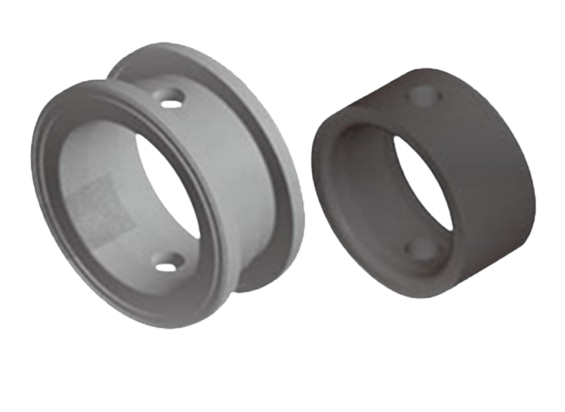
Short Description
A rubber seat valve is a type of valve (commonly BUTTERFLY VALVE) that uses rubber (elastomer) lining/seat as the sealing element.
Its main advantage is tight shut-off (zero leakage), high abrasion resistance, and suitability for potable water, wastewater, and non-corrosive fluids. Rubber seat valves are widely used in water distribution systems, sewage installations, and general industry.
Key Features
- Soft-seated design provides bubble-tight sealing
- Simple operation and low maintenance
- Resistant to slurry, sand, and particles in the fluid
- Suitable for potable water, wastewater, and irrigation systems
- Robust construction with rubber coating for wear resistance
- Long service life with replaceable rubber seat
- Can be installed in both horizontal and vertical positions
Types of Rubber Seat Materials for Valves
- EPDM (Ethylene Propylene Diene Monomer)
- Properties : Excellent resistance to water, steam (low pressure), acids, and alkalis.
- Temperature Range : -40°C to +120°C
- Applications : Potable water, wastewater, HVAC systems, mild chemicals.
- Limitations : Not suitable for petroleum oils, fuels, or solvents.
- NBR (Nitrile Butadiene Rubber / Buna-N)
- Properties : Good resistance to oils, fuels, and hydrocarbons.
- Temperature Range : -30°C to +100°C
- Applications : Oil, gas, fuel handling, hydraulic fluids.
- Limitations : Poor resistance to ozone, sunlight, and strong oxidizing agents.
- Viton® (FKM – Fluoroelastomer)
- Properties : Excellent chemical resistance, especially to acids, solvents, and high temperature.
- Temperature Range : -20°C to +200°C
- Applications : Chemical industry, high-temperature steam, aggressive media.
- Limitations : More expensive compared to EPDM/NBR.
- Silicone Rubber (VMQ)
- Properties : Very good flexibility and sealing at extreme temperatures.
- Temperature Range : -60°C to +200°C
- Applications : Food & beverage industry, pharmaceutical, medical applications.
- Limitations : Limited mechanical strength and abrasion resistance.
- Neoprene (CR – Chloroprene Rubber)
- Properties : Balanced resistance to oils, chemicals, ozone, and weathering.
- Temperature Range : -20°C to +100°C
- Applications : Marine systems, refrigeration, and outdoor use.
- Limitations : Not as resistant to fuels as NBR.
- Natural Rubber (NR)
- Properties : High elasticity, excellent abrasion resistance.
- Temperature Range : -20°C to +80°C
- Applications : Slurry, mining, and abrasive media.
- Limitations : Poor resistance to oils, fuels, and ozone.