
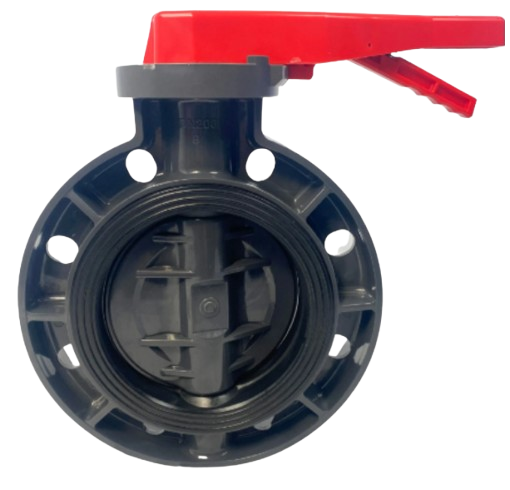
Short Description
A plastic butterfly valve is a quarter-turn valve designed to regulate or shut off the flow of fluids in a pipeline, made primarily from plastic materials such as PVC, CPVC, PP, or PVDF.
These valves are lightweight, corrosion-resistant, and ideal for handling aggressive chemicals, seawater, and other corrosive fluids where metal valves may not be suitable.
Key Features
- Lightweight and corrosion-resistant construction
- Suitable for chemical, water treatment, and light industrial applications
- Easy quarter-turn operation (90°)
- Excellent resistance against acids, alkalis, and saltwater
- Cost-effective compared to metal valves in corrosive environments
- Available with manual handle or actuator (electric/pneumatic)
- Long service life with minimal maintenance
- Non-toxic and safe for potable water applications (depending on material)
Material Components
- Body : PVC (Polyvinyl Chloride), CPVC (Chlorinated PVC), PP (Polypropylene), PVDF (Polyvinylidene Fluoride)
- Disc : PVC, PP, PVDF, or Stainless Steel (lined with plastic for extra resistance)
- Seat : EPDM, NBR, FPM (Viton), PTFE (depending on fluid compatibility)
- Stem/Shaft : Stainless Steel, FRP-coated Steel, or Plastic (reinforced)
Handle / Actuator : PVC, ABS Plastic, or optional Gearbox/Pneumatic/Electric actuator
Specifications
- Size Range : DN50 – DN400 (2” – 16”), larger sizes available on request
- Pressure Rating : PN6 – PN10 (up to 10 bar)
- Temperature Range : 0°C to +80°C (PVC), up to +120°C (CPVC, PVDF)
- End Connections : Wafer, Lug, or Flanged (ISO/DIN/ANSI standards)
- Operation : Manual Lever, Gearbox, Pneumatic Actuator, Electric Actuator
- Applications :
-
-
- Water treatment & distribution
- Chemical processing & corrosive media
- Seawater and marine systems
- Swimming pools & aquaculture systems
- Food & beverage (depending on material certification)
-
- Standards :
-
- Design: ISO 5752 / EN 558
- Flange Standard: EN 1092, ANSI B16.5, JIS
- Testing: ISO 9393 / API 598 equivalent